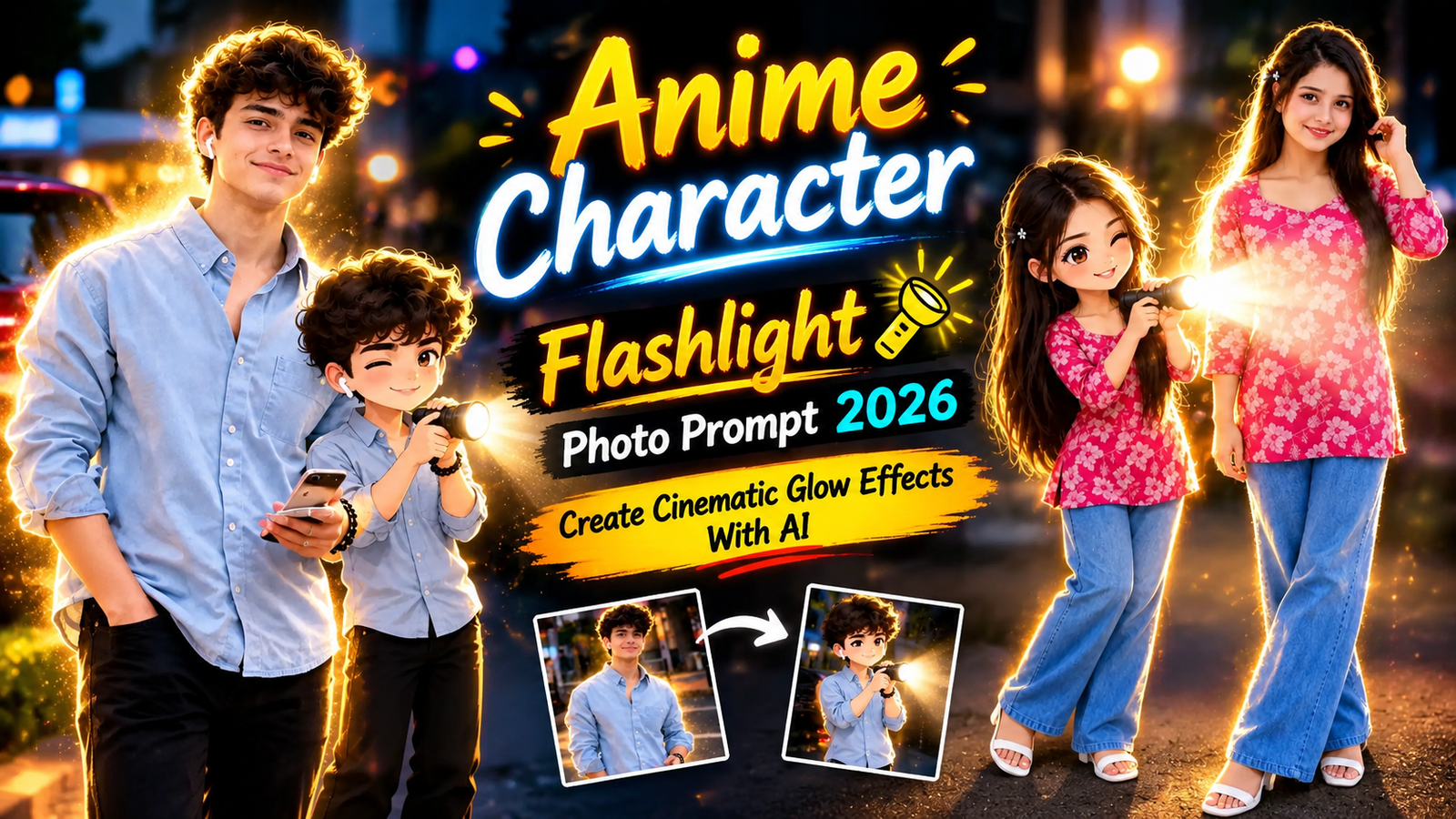
Anime Character Flashlight Photo effect, where a small anime-style version of the subject appears behind them and creates a powerful beam of light.
This concept gives an ordinary outdoor photograph a completely different atmosphere. The original person remains realistic, while the anime character adds a playful fantasy element. The combination of real photography, anime artwork, and dramatic lighting makes the final image look like a scene from a modern fantasy movie.
What Is an Anime Character Flashlight Photo?
An Anime Character Flashlight Photo is an AI-assisted photo-editing concept that combines a realistic portrait with a miniature anime or cartoon version of the same person.
The anime character is usually placed behind or near the main subject. It can hold a flashlight and direct a bright beam toward the person’s back. The light creates a glowing outline around the real subject, making the person appear separated from the darker background.
What makes this style interesting is the contrast between two visual worlds. The main subject looks like a real photograph, while the smaller character has anime-inspired proportions, expressive facial features, clean linework, and cel-shaded details.
The result feels like a creative crossover between photography and animation.
Why This AI Photo Editing Style Is Trending
People are increasingly interested in AI edits that tell a visual story instead of simply changing someone’s clothes or background. The flashlight concept works particularly well because it adds a sense of action to an otherwise normal photograph.
A regular street portrait can become a cinematic scene with only a few carefully designed elements. The moving vehicle in the background, sunset lighting, realistic shadows, and glowing flashlight beam can all work together to create depth.
Another reason this style attracts attention is its personalization. The anime character can be designed to resemble the main subject by matching details such as hairstyle, clothing, accessories, and overall color combinations.
This makes the character feel connected to the original photograph rather than looking like a random animated figure.
The Importance of Matching the Original Subject
One of the most important aspects of this editing style is maintaining the recognizable appearance of the main subject.
The original hairstyle, clothing, accessories, body position, and facial characteristics should remain consistent with the source image. If these details change too much, the final composition may lose the connection between the person and their anime counterpart.
For example, if the original subject is wearing a dark shirt and light-colored trousers, the anime version can use a similar outfit. Matching these details creates a visual relationship between both characters.
The goal is not to replace the person with an anime character. Instead, the anime character should feel like a smaller animated version of the same person existing within the photograph.
Creating the Cinematic Glow Effect
Lighting is one of the biggest elements responsible for making this concept look realistic.
A flashlight positioned behind the main subject can create a strong backlight. When the beam interacts with the person’s body, it produces a bright rim around the shoulders, hair, arms, and clothing.
This effect is often called rim lighting. It helps separate the subject from the background and gives the photograph a cinematic appearance.
The surrounding environment can also be slightly darker so that the flashlight becomes the main visual highlight. However, the light should still interact naturally with the subject and surroundings. Reflections on the road, subtle shadows, and atmospheric glow can make the scene much more believable.
Combining Anime and Photorealism
The biggest creative challenge is balancing the anime character with the realistic environment.
If the anime character is too realistic, the concept may lose its animated identity. On the other hand, if the character looks extremely flat or disconnected from the environment, the final image may appear like a simple sticker placed over a photograph.
A clean modern anime aesthetic usually works well for this concept. Sharp linework, expressive eyes, slightly oversized heads, compact proportions, and controlled cel shading can give the character a polished appearance.
At the same time, the environment should retain realistic textures, natural depth, and photographic lighting.
This contrast is what makes the final image visually interesting.
Choosing the Right Background
Although the effect can be created in many environments, urban locations are particularly suitable.
Busy streets, bridges, city roads, train stations, markets, and evening streets can provide motion and visual depth. A moving vehicle in the background can create horizontal motion blur while the main subject remains relatively sharp.

Transform the main subject into a small, full-body anime character version of themselves, standing directly behind the real subject. Preserve the exact hairstyle, clothing, accessories, colors, facial identity cues, and recognizable details from the original subject. Give the anime character a clean premium modern-anime design with crisp linework, slightly oversized head, compact proportions, expressive eyes, and refined cel shading.The tiny anime character holds a realistic handheld flashlight aimed directly toward the real subject’s back. Create an intense, concentrated pure-white beam traveling forward from the flashlight, visibly illuminating the subject from behind. Add realistic volumetric light, bright rim lighting around the shoulders and hair, subtle atmospheric glow, and physically natural cast shadows. Keep the flashlight beam believable rather than magical.Slightly darken the surrounding outdoor environment to make the white beam and rim light dramatically stand out. Preserve the original location, background, camera perspective, framing, subject pose, depth, and photographic realism. The anime character should look naturally integrated into the real scene, creating a striking anime-meets-photography composition.

Create a photorealistic scene where a miniature full-body anime/cartoon version of the main subject appears immediately behind them, perfectly aligned with the original composition. Match the anime character’s hairstyle, outfit, accessories, color palette, and distinctive recognizable details to the real subject. Use sophisticated contemporary anime styling with sharp clean outlines, compact body proportions, a slightly enlarged head, detailed expressions, subtle cel shading, and polished highlights.The miniature character stands confidently behind the real subject and points a powerful flashlight toward their back. Generate a brilliant realistic white light beam that spreads naturally across the subject’s back and edges, producing strong backlighting, glowing hair highlights, luminous rim light, soft atmospheric bloom, and realistic secondary shadows. The brightest illumination should originate from the flashlight and gradually fall off through the environment.Reduce the ambient outdoor exposure while retaining enough background detail for realism. Maintain the exact original camera angle, perspective, framing, environment, pose, clothing, and photographic texture. The final result should feel like a seamless real photograph enhanced with a professionally composited anime companion and dramatic cinematic lighting.
Sunset is another excellent setting because it naturally provides warm highlights. When combined with a bright artificial flashlight, the image can contain both warm and cool-looking lighting elements.
A slightly blurred background also helps keep attention on the main subject and anime character.
Details That Make the Image More Realistic
Small details can make a significant difference in AI-generated photo edits.
The flashlight beam should not simply appear as a solid white triangle. It should have a bright central source, gradual diffusion, and a soft glow around its edges.
The light should also affect the main subject. Hair can receive a subtle highlight, clothing can show brighter edges, and nearby surfaces can reflect some of the illumination.
Natural shadows are equally important. If a strong light source is positioned behind the person, the direction and intensity of the shadows should make sense.
These details help transform the image from a basic AI effect into a more convincing cinematic composition.
How to Create Better Results With AI
When creating this type of image with an AI photo-editing tool, it helps to describe the scene clearly rather than relying only on the phrase “anime flashlight effect.”
The editing instructions should explain the relationship between the real subject and the anime character. It can specify that the anime version should appear behind the subject, hold a flashlight, and direct the beam toward the subject’s back.
It is also useful to mention that the original composition, camera perspective, clothing, and background should remain consistent.
Lighting instructions are especially important. The AI should understand that the flashlight is a strong light source and that it needs to produce a visible glow, rim light, and realistic interaction with the surroundings.
Preserving the Original Composition
A common problem with AI photo editing is unnecessary modification of the original scene.
If the original photograph already has a strong composition, changing the camera angle or completely replacing the background can make the result feel unrelated to the source image.
For the anime flashlight concept, preserving the original composition is usually more effective.
The main subject can remain in the same position, while the anime character is added behind them. The original city environment, road, sunset, and background movement can remain recognizable.
This approach makes the transformation feel like an enhancement rather than a completely new image.
Best Uses for Anime Flashlight AI Photos
This style can work well for social media posts, profile content, creative photography collections, short-form video thumbnails, blogs, and AI art communities.
It can also be adapted for different themes. A city street can create an urban cinematic mood, while a forest setting can give the image a fantasy atmosphere. A nighttime environment can make the flashlight even more visually important.
Creators can experiment with different character sizes, poses, lighting directions, and environments while maintaining the same basic concept.
Common Mistakes to Avoid
There are a few things that can reduce the quality of an anime flashlight edit.
One common issue is making the anime character too large. The character should complement the main subject rather than dominate the entire image.
Another problem is excessive brightness. A flashlight beam that completely washes out the subject can remove important facial and clothing details.
Poor positioning can also make the character appear disconnected. The anime character should have a believable stance and should be positioned naturally within the scene.
Finally, changing too many original details can reduce the realism of the edit. Keeping the main subject recognizable is usually more important than adding unnecessary visual effects.
Final Thoughts
The Anime Character Flashlight Photo Prompt 2026 trend demonstrates how AI photo editing can combine realistic photography with imaginative animation. Instead of simply applying an anime filter, this concept creates a complete visual story by placing an animated version of the subject inside the original photograph.
The glowing flashlight, cinematic rim lighting, realistic environment, and expressive anime character work together to create a distinctive image. With careful attention to composition, lighting, proportions, and subject details, creators can turn an ordinary photograph into something that feels like a frame from a fantasy movie.
As AI editing tools continue to develop, concepts like this are likely to become even more detailed and customizable. The most successful results will come from balancing creativity with realism—keeping the original photograph recognizable while introducing just enough animated detail to make the scene feel unique.
Whether you are creating content for social media or simply experimenting with AI photography, the anime flashlight concept offers an engaging way to explore the combination of realistic portraits, anime characters, cinematic lighting, and imaginative storytelling.
What do you feel about this post?

Like

Love

Happy

Haha

Sad